The Story Behind the Name
The Mystery of Pittsburgh-Style Steak
Burnt outside, raw within — and a name nobody can prove the origin of. I grew up in Pittsburgh and didn't hear it until I was forty, in New Orleans. So I went looking.
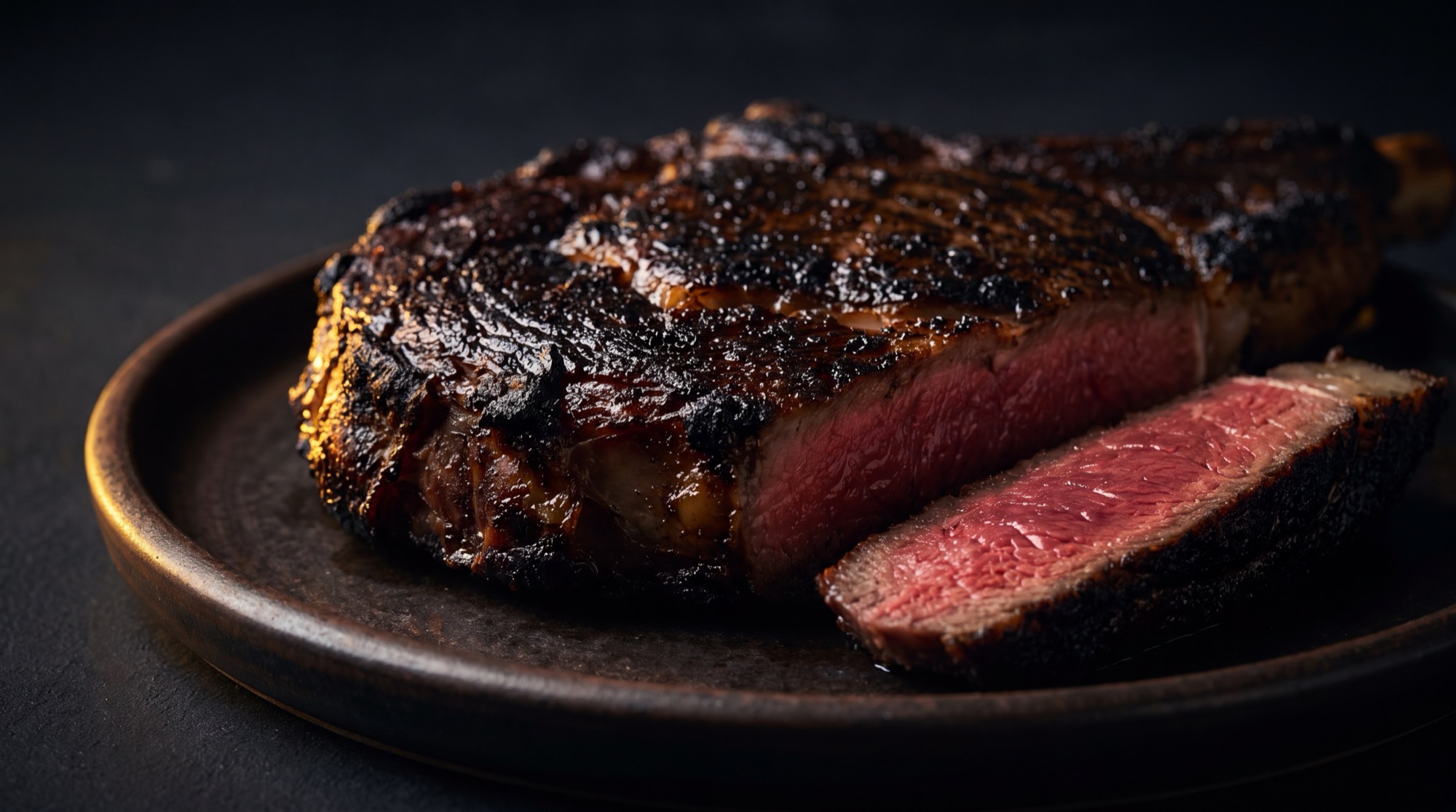
I should have known this one
I grew up in Pittsburgh. And the first time I ever heard someone call a steak “Pittsburgh style,” I was forty years old, sitting in a restaurant in New Orleans. Forty years — in the city the thing is named after — and I’d never heard it once. That bothered me enough to go find out where the name came from. The answer turned out to be a better story than I expected: nobody actually knows.
Turns out I wasn’t the only one
Back in 1977, a Pittsburgh Post-Gazette columnist named Joe Browne wrote almost exactly what I felt — that he’d “never heard of the expression till I was in a restaurant in State College, Pa.” Five years later he was still at it: “I’ve rarely heard it being ordered in Pittsburgh… It’s not unusual, though, to encounter it out of town.”1 A Pittsburgh newspaperman, in Pittsburgh, finding the Pittsburgh steak exotic. If the trail started anywhere obvious, it wasn’t on the mill floor.
First, what it actually is
On the plate, “Pittsburgh style” (or “Pittsburgh rare”) means one thing: a hard, blackened char on the outside, and a cool, rare-to-raw red center inside — roughly 110–120°F, barely warmed through.24 You get it with maximum heat and minimum time: a screaming-hot surface, a minute or two a side, so the outside chars before the middle catches up. Same steak goes by other names depending on where you’re standing — “black and blue,” “Chicago-style rare,” or just “blue.”4 Funny thing: in Pittsburgh itself, people usually just say black and blue.410
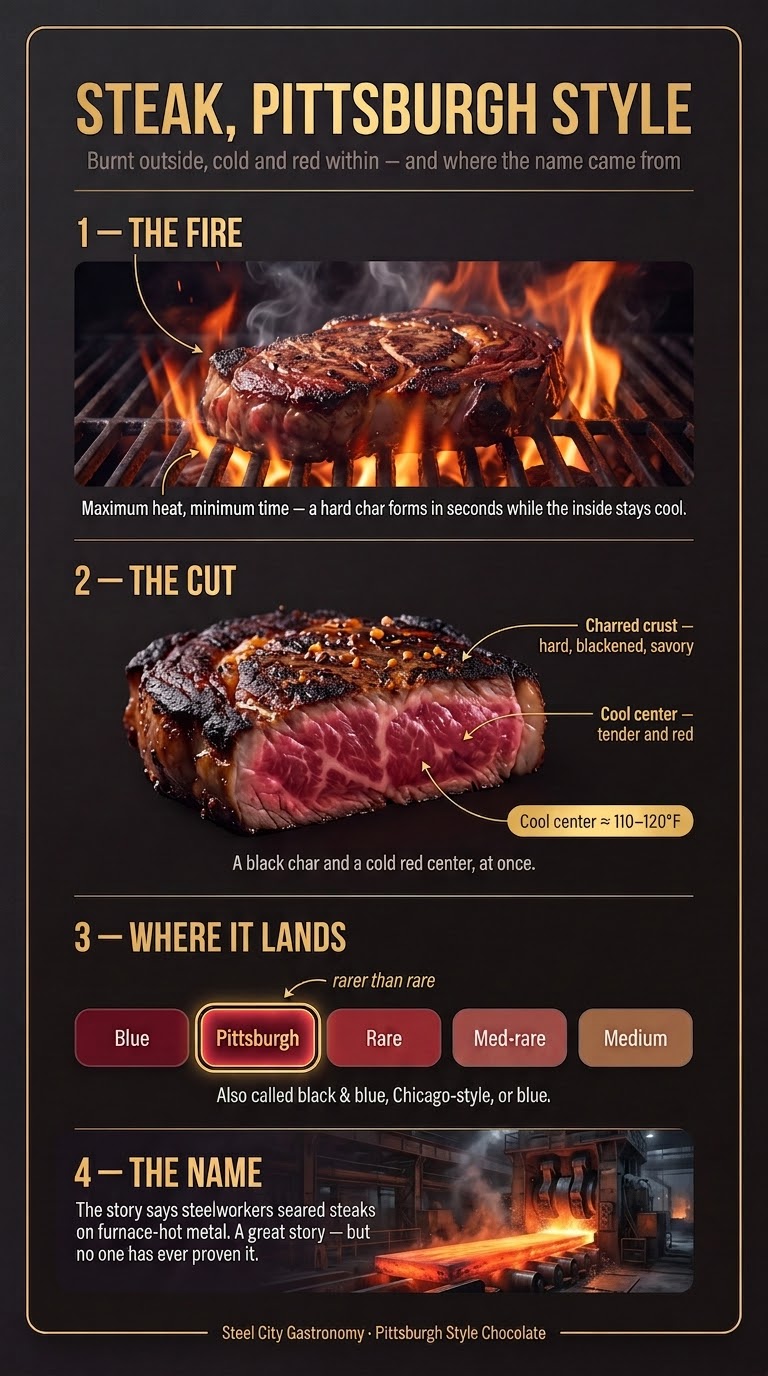
The legend (this is the fun part — and it’s a legend)
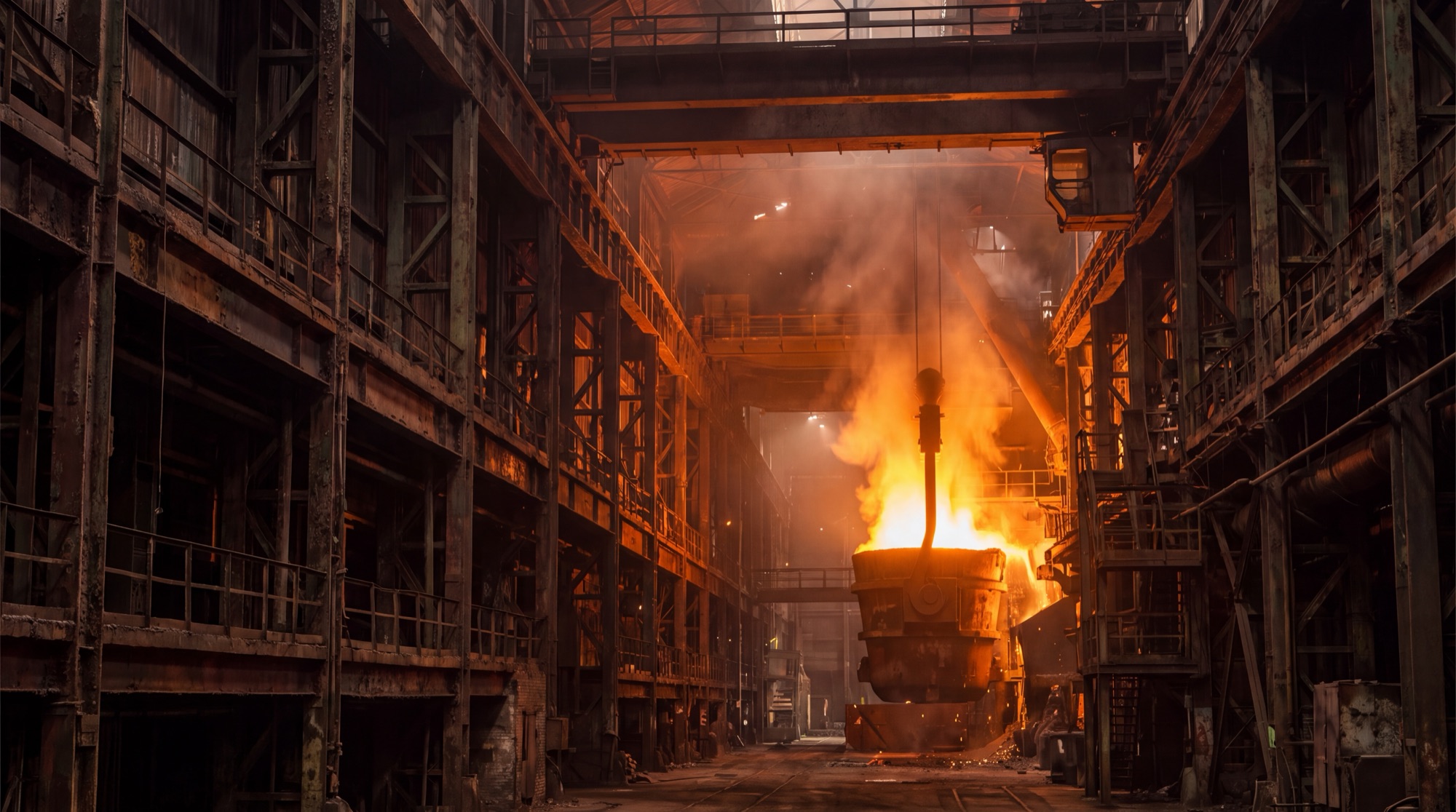
Here’s the story everyone tells: Pittsburgh steelworkers, on a short lunch break, slapped raw steaks onto the searing-hot metal of the blast furnaces — or onto cooling slabs of steel, or seared them with a welding torch — charring the outside in seconds while the inside stayed cold. It’s a great story. It’s pure steel-town romance. It also has zero documentary evidence behind it — no mill-worker account, no company record, no photograph, nothing.14 Wikipedia repeats it and then quietly admits it’s “debatable” whether any of the origin tales are real “or just a play on Pittsburgh’s industrial image.”4 (The welding-torch version doesn’t even hold up physically — a blowtorch can’t reliably hit searing temperature.10) There’s a second tale, too — a Depression-era slaughterhouse searing meat just enough to kill surface bacteria — with no place, no date, and no source at all.4 Beautiful campfire stories, both. We’re labeling them as such.
The paper trail goes somewhere strange
When you chase the actual dated record, it doesn’t lead to Pittsburgh. The earliest print use anyone has found is a March 2, 1976 motor-inn ad in The Progress of Clearfield, PA — about a hundred miles from the city — reading “Charbroiled Pittsburgh Style.”1 The next clear sightings are 1977, in Levittown (near Philadelphia), State College, and on Toronto menus.1 The synonym “black and blue” shows up even earlier, and in New York — a 1975 New York Times note on a Madison Square Garden steakhouse.3 So the documented story opens across Pennsylvania, Ontario, and Manhattan — everywhere but a Pittsburgh furnace.
The one address that’s real
There’s exactly one origin claim attached to a named, datable place: The Colony, a Pittsburgh steakhouse that opened in 1958.5 The whole claim rests on a single 1995 Post-Gazette line — you could still get your steak “Pittsburgh style… which Paul thinks started here.”3 Paul thinks. That’s the owner’s son, recalling a belief decades after the fact — no cook named, no customer, no year. It’s the best-anchored theory of the bunch, and it’s still just a hunch.
Even the masters reach for the romance, not the record
When the experts use the term, they don’t claim to know where it’s from — they just reach for the poetry. James Beard winner and Barbecue Hall of Famer Steven Raichlen learned it from his mother:
“She called the steak ‘Pittsburgh rare’ — the black evoking the smoke or perhaps coal from the Pittsburgh steel mills.”
— Steven Raichlen, Barbecue Bible6
Evoking. Even he flags it as metaphor, not history. And Austin pitmaster Aaron Franklin lands right on it, narrating the doneness rundown on his PBS show: “Black and blue, or Pittsburgh style: this is rarer than rare. Seared on the outside, still red and cool in the middle.”8 He puts it the same way in his own words elsewhere — “super rare in the middle, almost cold, and a hard sear on the outside.”9 A James Beard winner from Texas, naming a Pittsburgh steak for a national audience — which tells you something about whose term it really is now.
So who coined it? Cold case
Today “Pittsburgh rare” is a national steakhouse move — you can order it at chains and white-tablecloth rooms alike, and it’s arguably better known outside Pittsburgh than in it.4 But the actual moment someone first said it? The trail just… goes dark, somewhere around a 1976 motel ad in Clearfield. No first coiner has ever been found. The likeliest read — an evocative menu label that borrowed the city’s gritty image, with the back-stories bolted on later — fits the evidence, but it’s a read, not a verdict.1 We’re not going to pretend otherwise.
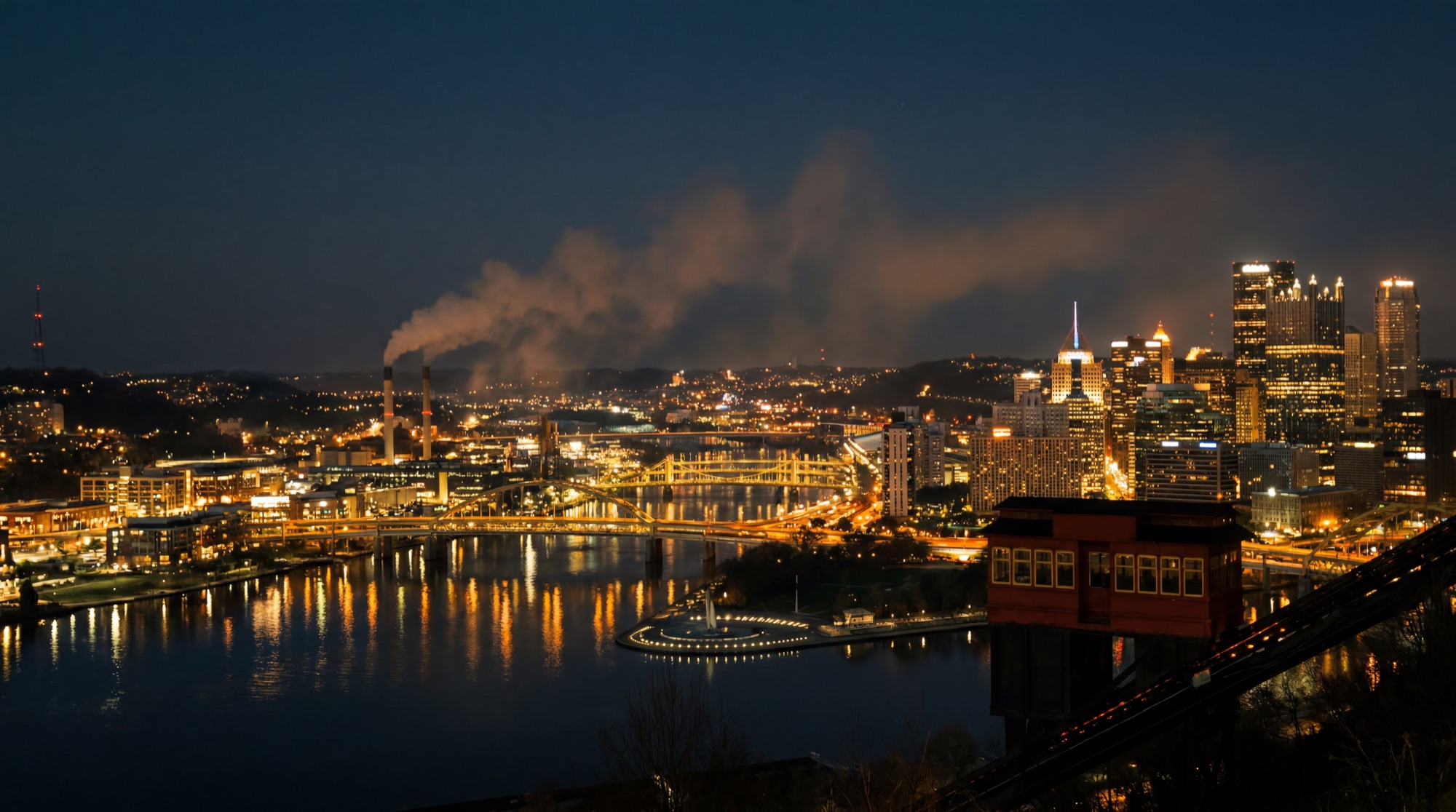
It’s the Immaculate Reception of food
Argued about forever, and there isn’t even a video to settle it. Pittsburgh has a way of holding onto its great unanswerable questions — the catch that may or may not have grazed Frenchy Fuqua, the steak nobody can prove a city actually invented — and loving them more for staying unsolved. Some questions a town would rather keep than answer.
Which is exactly why we kept the name
We called our chocolate Pittsburgh Style not for a furnace story we can’t prove, but because the description is honest and exact: burnt outside, raw within. A hard, dark char with something cool and unfinished underneath. We’ll take the metaphor — and leave the legend right where it belongs, labeled as legend.
Sources
- Barry Popik, “Pittsburgh Rare” — dated newspaper trail (1976 Clearfield Progress ad; 1977 Levittown, State College, Toronto; Joe Browne’s 1977 & 1982 Post-Gazette columns). barrypopik.com/blog/pittsburgh_rare
- WebstaurantStore — definition, technique & interior temperatures. webstaurantstore.com
- FoodTimeline.org — 1975 NYT “black and blue” (Steer Palace); 1995 Post-Gazette Colony quote. foodtimeline.org
- Wikipedia, “Pittsburgh rare” — definition, regional names, hedged origin legends. en.wikipedia.org/wiki/Pittsburgh_rare
- TribLive — The Colony restaurant opened 1958 (Dean Steliotes). archive.triblive.com
- Steven Raichlen, “Mother’s Pittsburgh Rare Steak,” Barbecue Bible. barbecuebible.com (& 2025 essay, “My Mother the Grill Master”)
- Aaron Franklin, narrating the doneness rundown on PBS’s BBQ with Franklin (his voiceover, at 7:07). youtube.com/watch?v=rDBNVO7K0kA · 7:07
- Aaron Franklin defines it in his own words, TASTE interview (2020). tastecooking.com
- CooksInfo, “Pittsburgh Rare” — local “black and blue” usage; welding-torch implausibility. cooksinfo.com/pittsburgh-rare
The steel-mill, welding-torch, and slaughterhouse origin stories are folklore with no primary evidence, and are presented here as legend, not fact. No source identifies who first coined the term, or exactly when and where.